Nextday Peptides: Coa Library For Research Peptides
@caidenjuvd775
October 7, 2026 · 3 min read
Certificate Of Analysis Coa
- Within the peptide industry, pureness levels over 90-- 95% are typically considered high for research-grade items.
- The reported purity indicates the proportion of the spotted substance relative to other obvious components in the example.
- Even with a completely valid peptide CoA, bad handling might modify the framework.
- Within the wider peptide research introduction, COAs also give understanding right into exactly how peptide research study compounds are evaluated and recorded prior to circulation for laboratory use.
- Pureness stands for the most important statistics on any peptide COA, with research-grade peptides typically needing minimum 95% pureness and higher-grade products attaining 98% or higher.
What Is The Distinction Between Hplc And Lc-ms?
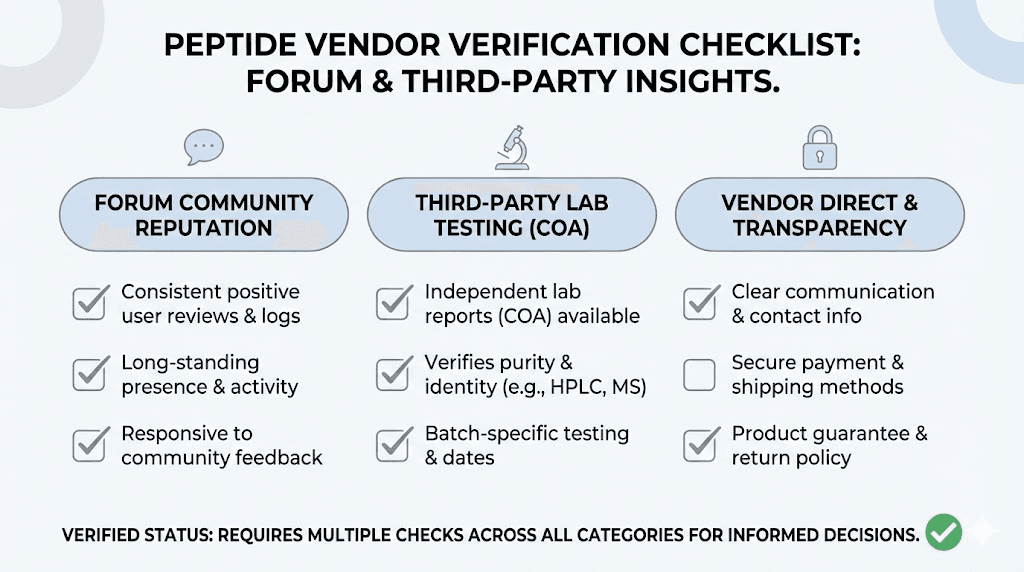
Purchasers must inspect whether the product page, label, and COA all straighten with each other. When the names, set references, or supporting details do not match, confidence in the documents becomes https://remingtonabqe265.valiantfield.com/posts/research-study-quality-peptides weaker. A great deal or set number assists attach the file to a particular evaluated product. Without that connection, it ends up being tougher to figure out whether the COA plainly corresponds to the product being referenced. At a high degree, it can offer one more layer of analytical context by assisting define what is present in the example.A certificate of analysis, or COA, is a file that sums up details logical results for a provided material or batch. In the peptide context, it commonly includes purity information, whole lot Look at this website or batch details, examination dates, and the analytical technique utilized to produce the reported result. The report usually determines the lab in charge of carrying out the evaluation. Laboratories, researchers, and establishments that collaborate with research study peptides count on standard analytical paperwork to validate the identity and high quality of research study products. One of the most important documents utilized in this confirmation procedure is the peptide certification of analysis, commonly described as a peptide COA.
Third-party Confirmation
The International Council for Harmonisation (ICH) Q3C guidelines develop appropriate restrictions for residual solvents based upon their toxicity classifications. Class 1 solvents should be avoided completely, Class 2 solvents have specific concentration restrictions, and Class 3 solvents are considered much less poisonous with greater appropriate degrees. TFA, frequently made use of in peptide synthesis, commonly appears at levels listed below 1% in correctly detoxified products.
Even with a completely valid peptide CoA, inadequate handling might change the framework. That's why we constantly recommend maintaining referral materials in appropriate storage space as soon as possible. As an example, if a pollutant is provided, laboratories will confirm the limits to see if it's regular for that sort of peptide. They may additionally want to know how to discover the day when the example was tested, given that older examinations occasionally require extra checks. Checking out a CoA isn't regarding remembering every term however knowing what each number suggests for the job.